
Is a Driveshaft Easy to Fix?
Jan 10, 2025
The driveshaft is an essential component in any vehicle, responsible for transferring power from the engine or transmission to the wheels. While it’s designed to handle significant stresses and endure thousands of miles, it can wear out or become damaged over time. This raises an important question for many vehicle owners: is a driveshaft easy to fix? The answer largely depends on factors such as the extent of the damage, the tools and skills available, and whether you plan to tackle the job yourself or seek professional help. In this blog, we’ll explore the intricacies of driveshaft repair, what’s involved, and whether it’s something you can take on with confidence.
Understanding the Role of a Driveshaft
Before diving into the repair process, it’s important to understand what a driveshaft does and why it’s so crucial to your vehicle’s operation. A driveshaft is a cylindrical mechanical component that connects the gearbox or differential to the wheels. Its primary role is to transfer torque, enabling the wheels to turn and the vehicle to move. Depending on the type of vehicle, the driveshaft may vary in complexity, particularly in four-wheel-drive or all-wheel-drive models, where multiple driveshafts and universal joints may be involved. When the driveshaft is functioning correctly, you probably won’t even notice it. However, when problems arise, symptoms such as vibrations, clunking noises, or difficulty accelerating can quickly draw attention to this critical part. Repairing or replacing a faulty driveshaft is necessary not only to maintain performance but also to ensure the safety of the vehicle.
Diagnosing Driveshaft Problems
The first step in addressing driveshaft issues is proper diagnosis. While this may not seem like part of the repair itself, identifying the exact nature of the problem is critical to determining whether fixing it will be straightforward or complex. Common signs of a failing driveshaft include unusual vibrations while driving, clunking sounds during acceleration or turning, or visible damage such as cracks or worn-out universal joints. If you’re mechanically inclined, you may be able to inspect the driveshaft yourself by safely raising the vehicle and looking for obvious signs of wear or damage. However, for many people, this step is best left to a professional mechanic. A trained expert can use their experience and tools to thoroughly inspect the driveshaft and related components, providing a clear understanding of what repairs are needed.
Can You Fix a Driveshaft Yourself?
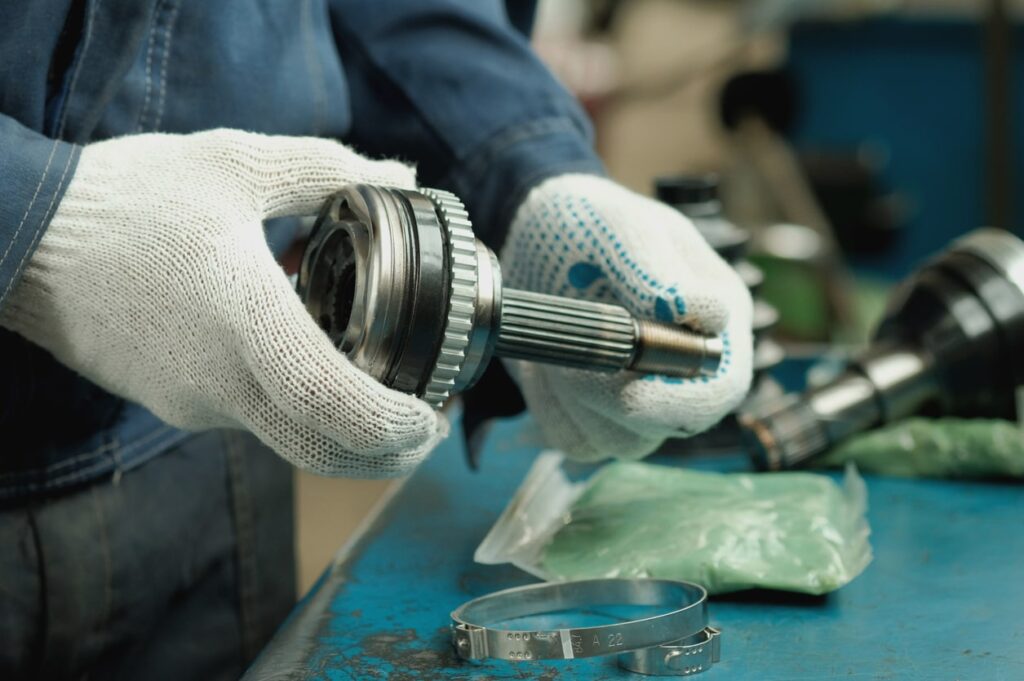
Whether you can fix a driveshaft yourself depends on your mechanical skills, the tools you have available, and the specific problem at hand. Simple repairs, such as replacing worn universal joints, may be within the capabilities of experienced DIY enthusiasts. This process typically involves removing the driveshaft, disassembling the affected joints, and fitting new ones. However, even this relatively straightforward task requires a good understanding of vehicle mechanics and access to the right tools, including a press or vice. For more serious issues, such as a bent or cracked driveshaft, repair becomes significantly more challenging In many cases, a damaged driveshaft may need to be replaced entirely, as repairs to structural components are often unreliable and can compromise safety. Additionally, balancing the driveshaft after repair is a precise process that requires specialised equipment to ensure the component operates smoothly at high speeds.
The Tools and Skills Required
Repairing a driveshaft is not something you can undertake without preparation. At a minimum, you’ll need a sturdy jack and axle stands to safely lift and support the vehicle, as well as basic hand tools such as spanners and sockets to remove and reinstall the driveshaft. For tasks like replacing universal joints, additional tools such as a vice, circlip pliers, and a hammer may be necessary. Beyond tools, repairing a driveshaft also requires a solid understanding of mechanical principles and the ability to follow repair manuals or online guides. Mistakes in reassembly or installation can lead to further issues, including imbalances that cause vibrations or premature wear. If you’re not confident in your abilities, it’s often better to seek professional help rather than risk damaging the vehicle further.
When to Seek Professional Assistance
For many vehicle owners, professional assistance is the safest and most reliable option for repairing or replacing a driveshaft. Mechanics have the experience, tools, and facilities needed to handle even the most complex driveshaft repairs efficiently. Additionally, they can inspect other components, such as the differential or wheel bearings, to ensure that no underlying issues are contributing to the problem. If your driveshaft requires replacement rather than repair, a professional can source and install the correct part for your vehicle, ensuring a perfect fit and reliable performance. At Driveshaft UK, we stock high-quality replacement driveshafts for a wide range of vehicles, and we work with trusted mechanics across the UK to provide expert installation services. This combination of quality parts and professional expertise ensures your vehicle is back on the road quickly and safely.

Cost Considerations for Driveshaft Repairs
The cost of fixing a driveshaft can vary widely depending on the type of vehicle, the extent of the damage, and whether you choose to repair or replace the component. Simple repairs, such as replacing universal joints, are generally less expensive and may cost as little as £50 to £150 if you’re doing the work yourself. However, more extensive repairs or full driveshaft replacements can range from £200 to £500 or more, particularly for specialised vehicles or those with complex drivetrains. While DIY repairs may seem like a cost-saving option, it’s essential to weigh the risks and potential additional expenses if something goes wrong. Professional repairs may have a higher upfront cost, but they provide peace of mind and are often covered by warranties, reducing the likelihood of future issues.
Maintaining Your Driveshaft for Longevity
One way to minimise the need for driveshaft repairs is through regular maintenance. Inspecting the driveshaft periodically for signs of wear or damage can help you catch problems early, before they become more serious. Ensuring that universal joints are properly lubricated and replacing worn components promptly can also extend the life of the driveshaft and prevent costly repairs down the line. If your vehicle is frequently subjected to harsh driving conditions, such as off-road use or heavy towing, it’s especially important to prioritise driveshaft maintenance. These conditions can accelerate wear and increase the likelihood of damage, making proactive care essential to avoiding unexpected breakdowns.
Is Fixing a Driveshaft Worth the Effort?
The decision to repair or replace a driveshaft ultimately comes down to your circumstances. If you’re a skilled DIY mechanic with the right tools, certain repairs can be relatively straightforward and rewarding. However, for most vehicle owners, seeking professional assistance is the best option, offering reliable results and ensuring safety on the road. At Driveshaft UK, we provide high-quality replacement driveshafts for a wide range of vehicles, backed by expert advice and fast nationwide delivery. Whether you choose to tackle the repair yourself or rely on a trusted mechanic, we’re here to help you find the right solution for your needs. Fixing a driveshaft may not always be easy, but with the right support and high-quality parts, it’s a manageable task that can restore your vehicle’s performance and reliability. For more information or to schedule a professional inspection, contact Driveshaft UK today. Our experienced team is here to provide the support and service you need to keep your driveshaft in excellent condition.