
Understanding What Makes Your Car Shake at High Speeds
Jul 9, 2025
Driving should feel smooth and secure, no matter how fast you’re going. But if your car starts to shake at high speeds — whether you’re on the motorway or overtaking on an A-road — it’s not just annoying, it can be a serious safety concern. From worn tyres to drive shaft problems, there are many possible culprits.
In this article, we’ll break down the common reasons your car might shake at high speeds, explain how to diagnose the issue, and explore two real-world case studies: a Volvo C30 and a VW Passat. By the end, you’ll know what steps to take to get that smooth ride back.
Why Does Your Car Shake at High Speeds?
Vehicle vibrations often start subtly — maybe you feel it through the steering wheel, or notice the seat vibrating. But at higher speeds (typically above 50-60 mph), those vibrations can become severe, affecting handling and even leading to further damage.
Here are the most common reasons:
1. Tyre Problems
Uneven tyre wear, unbalanced tyres, or damage like bulges can cause the wheels to spin unevenly. This imbalance intensifies at higher speeds, creating noticeable vibrations.
2. Wheel Alignment
Misaligned wheels lead to uneven tyre wear and can make your car pull to one side, but they can also cause shaking when your suspension is under more stress at motorway speeds.
3. Suspension & Steering Components
Worn ball joints, tie rod ends, or control arm bushings all affect your suspension geometry. When these parts wear out, they create play in the system, leading to vibrations.
4. Brake Issues
Warped brake discs (rotors) can cause vibrations even when you’re not braking. This is because they’re always rotating with the wheel.
5. Drive Shaft & CV Joint Issues
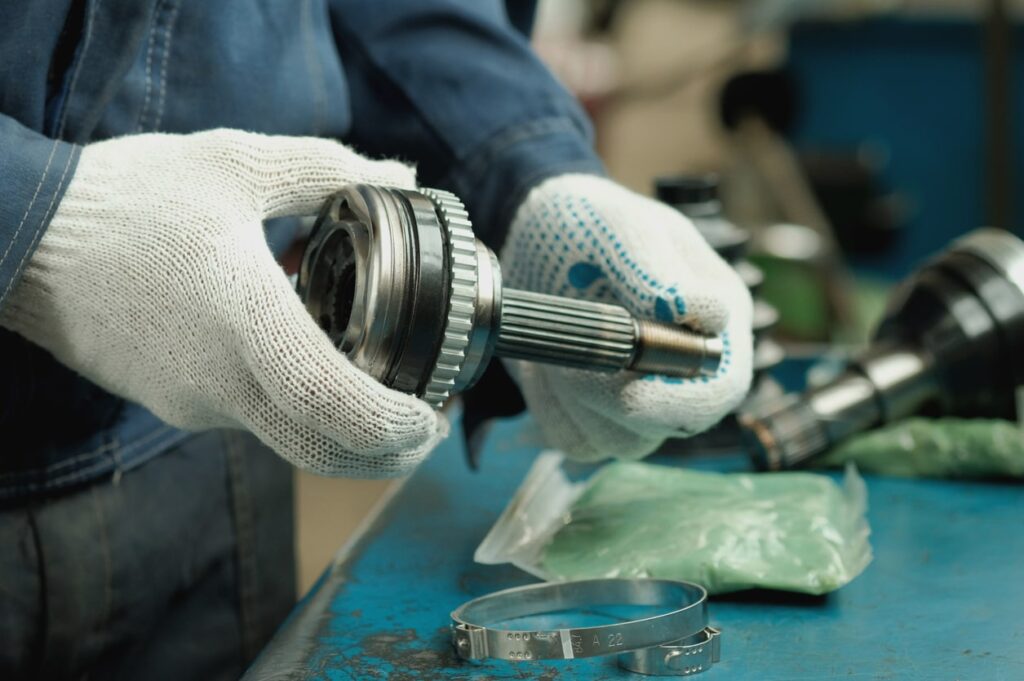
For front-wheel-drive and all-wheel-drive cars, the drive shaft and constant velocity (CV) joints are crucial. If the CV joints are worn or the drive shaft is unbalanced or damaged, they can cause severe vibrations at speed.
6. Engine & Transmission Mounts
These mounts hold the engine and gearbox in place. If they fail, vibrations from the engine can transfer directly to the chassis.
How to Diagnose the Cause
Pinpointing the problem is all about careful observation:
✅ Does it vibrate only when accelerating?
Drive shaft or CV joint issues are likely.
✅ Does it vibrate when braking?
Check for warped brake discs.
✅ Is the vibration felt mostly through the steering wheel?
Front tyres, wheels, or suspension components could be the issue.
✅ Is the vibration felt through the seat?
This often points to rear wheel imbalance or rear suspension issues.
✅ Any clunking noises?
That’s a big red flag for worn joints or mounts.
If you’re unsure, always get a professional inspection — ignoring the issue could lead to bigger, costlier problems down the road.
Case Study: Volvo C30
Let’s look at a real-world scenario involving a Volvo C30, a popular compact hatchback known for its sporty handling.
Owner Complaint:
The owner noticed a slight vibration through the steering wheel at 50 mph, which worsened dramatically at 70 mph. There was also a faint clunk when accelerating from a stop.
Inspection & Diagnosis:
A technician first checked the tyres and wheels. The tyres were evenly worn, but one front wheel was slightly bent — enough to cause minor vibration but not the main issue.
Next, the suspension was checked. Ball joints, tie rods, and control arms were in good condition.
Attention turned to the drive shaft and CV joints. The outer CV boot on the passenger side was split, leaking grease. Further inspection showed the CV joint had excessive play and some scoring, which meant it was failing.
Repair:
The technician replaced the damaged CV joint and boot. They also balanced the wheels and straightened the bent rim.
Outcome:
After the repair, the Volvo C30 was test-driven up to 80 mph — completely smooth, with no more vibration. The owner avoided potential drive shaft failure that could have led to a breakdown.
Takeaway:
The Volvo C30’s transverse engine and front-wheel-drive setup make CV joints and drive shafts a common weak spot, especially on older models. Regular inspections can catch issues like split CV boots early, saving money and hassle.
Case Study: VW Passat
Now, let’s examine a VW Passat, a popular mid-size family car that’s well-known for its comfort and motorway cruising.
Owner Complaint:
The owner reported a vibration felt mostly through the seat when driving at 60-70 mph. The steering wheel felt fine, but there was a slight humming noise from the rear.
Inspection & Diagnosis:
A garage checked the front wheels and tyres — both were balanced and showed no excessive wear. The suspension and steering components were in good shape.
Attention shifted to the rear wheels. One tyre had a flat spot from emergency braking a few weeks prior. More importantly, the rear wheel bearings showed signs of wear, with noticeable play when the wheel was rocked side to side.
Repair:
The flat-spotted tyre was replaced and the rear wheel bearings were replaced on both sides.
Outcome:
After the repairs, the Passat drove smoothly at all speeds. The vibration and humming noise disappeared.
Takeaway:
In this case, the vibration came from the rear of the vehicle — a reminder that not all high-speed shakes come from the front wheels or steering. Checking the entire drivetrain, tyres, and bearings is essential.
What’s the Risk of Ignoring Vibrations?
A mild vibration may seem harmless, but it’s often a sign of wear that will only get worse. Ignoring it can lead to:
🚫 Uneven tyre wear, costing you more in replacements
🚫 Damage to suspension or steering components
🚫 Complete CV joint or drive shaft failure — which can leave you stranded
🚫 Dangerous handling, especially in emergency manoeuvres
How to Fix It: DIY or Professional?
While you can check for obvious signs like damaged tyres or loose wheel nuts yourself, many issues require a trained eye and proper tools. A reputable garage can:
🔧 Balance your wheels correctly
🔧 Inspect suspension and steering for play
🔧 Check drive shafts and CV joints for leaks or damage
🔧 Replace worn bearings, joints, or mounts as needed
If you need new parts, choose quality replacements. For example, at DriveShaft UK, you can find drive shafts and CV joints that match original manufacturer specifications, ensuring safe, long-lasting performance.
Pro Tips for Preventing Future Vibrations
✅ Rotate your tyres regularly to promote even wear.
✅ Check your wheel alignment annually or after hitting a pothole.
✅ Inspect CV boots for splits — a small split can ruin a whole joint if ignored.
✅ Balance your wheels when fitting new tyres.
✅ Listen for unusual noises, and don’t wait for them to get worse.
Final Thoughts
A car that shakes at high speeds isn’t just annoying — it’s your vehicle’s way of telling you something needs attention. From the sporty Volvo C30 to the dependable VW Passat, these real-world examples show how the culprit can vary, but the solution is the same: diagnose the problem early and use quality parts when replacing worn components.
Your safety and comfort depend on it.
Need a drive shaft or CV joint replacement?
At DriveShaft UK, we supply premium-quality drive shafts for Volvo, VW, and many other makes and models. Fast shipping, expert advice, and parts you can trust. Contact us today.