
How Does a Driveshaft Break?
Jun 12, 2025
A driveshaft is one of those components that quietly does its job behind the scenes, transmitting torque from the engine and gearbox to the wheels. It’s essential for keeping your car moving, yet many drivers give it little thought until something goes wrong. For example, when a Skoda driveshaft breaks, it can cause serious drivability issues, and in extreme cases, pose a safety hazard. Understanding how a driveshaft can fail, what causes it, and how to prevent it is key to maintaining your vehicle’s performance and longevity.
What Is a Driveshaft and What Does It Do?
A driveshaft is a mechanical component used in vehicles to transmit torque from the engine to the wheels. In front-wheel drive vehicles, the driveshaft is typically a short shaft that connects the gearbox to the wheels through constant velocity (CV) joints. In rear-wheel drive and four-wheel drive vehicles, it’s usually a longer shaft running the length of the car, linking the gearbox to the rear axle or differentials.
The driveshaft has to be strong and flexible enough to cope with constant rotation, torque variations, and suspension movements. It needs to maintain balance, absorb vibrations, and ensure a smooth transfer of power regardless of driving conditions. Despite its robust design, driveshafts are still vulnerable to wear and damage.
Common Causes of Driveshaft Failure
One of the most frequent causes of driveshaft failure is general wear and tear. Like all moving parts, driveshafts degrade over time. The components that are particularly susceptible to wear are the CV joints and universal joints (U-joints). These joints enable the driveshaft to flex and accommodate the movement of the suspension and steering. As they wear, they may become loose or seize up, leading to vibrations, knocking noises, and ultimately failure.
Road debris is another cause of damage. Stones, salt, or other debris from the road can hit the driveshaft or damage the protective boots covering the CV joints. Once a boot is torn or split, grease can leak out and moisture and dirt can get in. This quickly leads to joint degradation and eventually total failure.
Corrosion is also a major contributor, particularly in the UK where winter roads are treated with salt. Over time, the metal can rust and weaken, especially if the driveshaft is exposed to the elements without regular cleaning or maintenance.
Accidents and impact damage can also cause a driveshaft to break. Hitting a pothole, kerb, or large obstruction at speed can bend or fracture the shaft. This kind of sudden trauma may result in an immediate loss of power transmission or create damage that worsens over time.
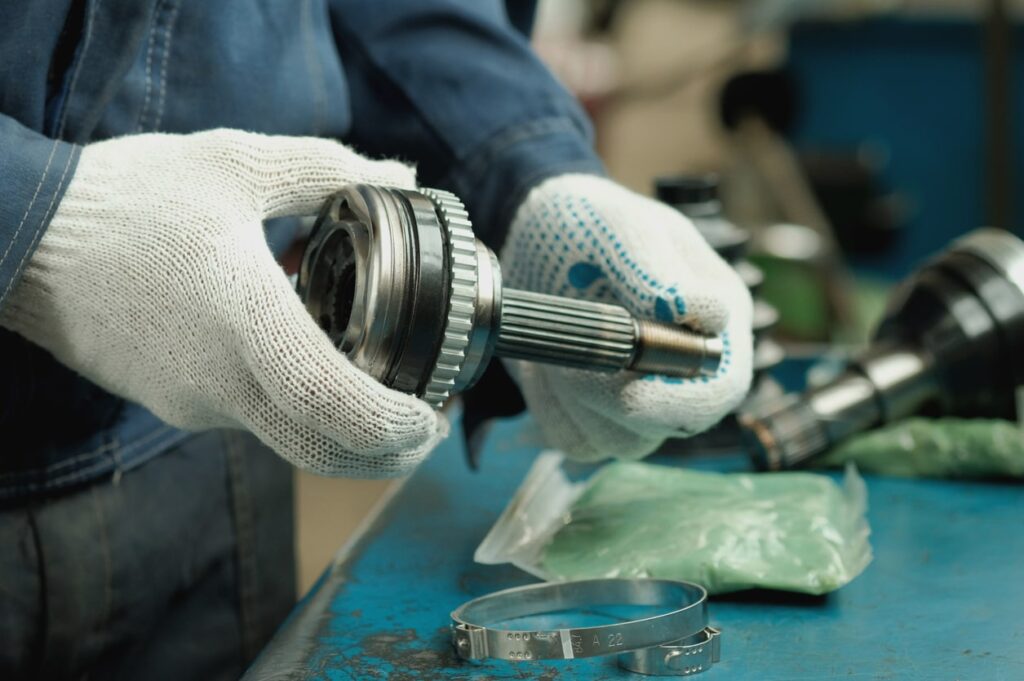
DThe Role of CV Joints and U-Joints in Driveshaft Failure
CV joints and U-joints play a vital role in the driveshaft’s performance. The CV joints, found on front-wheel drive and many all-wheel drive vehicles, allow the driveshaft to bend while transmitting torque. U-joints are commonly found in rear-wheel drive setups and serve a similar function. When these joints begin to fail, the symptoms are usually quite noticeable.
In the early stages of joint wear, you might notice clicking noises when turning, especially on full lock. This is often a telltale sign of a CV joint beginning to break down. In the case of U-joints, you might experience vibrations at certain speeds or when accelerating. As the wear worsens, the joints can seize up or become dangerously loose, causing severe imbalance and strain on the shaft.
If left untreated, worn joints can eventually lead to a complete break in the driveshaft. The joint may separate or snap under the stress of power delivery, especially during acceleration or when carrying heavy loads. In severe cases, a broken driveshaft can cause the vehicle to lose control, particularly if it happens at high speed.
How Imbalance and Poor Installation Lead to Failure
A driveshaft must be correctly balanced to operate efficiently. Even a slight imbalance can result in vibrations that place unnecessary strain on the entire drivetrain. Over time, this leads to premature wear not only on the driveshaft itself but also on bearings, mounts, and other connected components.
Imbalance can be caused by damage to the shaft, corrosion that changes its weight distribution, or improper assembly. If a driveshaft has been replaced or repaired and hasn’t been balanced properly, the resulting vibrations may not be immediately obvious, but they will cause damage over time.
Poor installation is another factor that can lead to driveshaft failure. If the driveshaft is installed at the wrong angle, or if incorrect components are used, it can result in excessive stress on the joints. This can cause early failure, even in new parts. That’s why it’s important to have driveshafts fitted by experienced technicians who understand the exact tolerances and specifications for your vehicle.
Overloading and Its Effect on Driveshaft Integrity
Vehicles are designed to carry a certain load within safe operating limits. Exceeding this load places additional stress on the entire drivetrain, including the driveshaft. Towing heavy trailers or consistently carrying weight beyond the vehicle’s capacity can cause the shaft to twist, bend, or crack under pressure.
In commercial vehicles or modified cars, driveshaft failure due to overloading is not uncommon. Modifications that increase power output without upgrading the drivetrain can also result in breakage. When more torque is delivered through the shaft than it’s designed to handle, failure is only a matter of time.
The signs of stress from overloading may include a whining or droning noise during acceleration, increased vibration, or a clunk when engaging the transmission. These are all indicators that the driveshaft or its joints are under excessive load and potentially at risk of failure.
Environmental Factors That Affect Driveshaft Longevity
The UK’s climate, with its wet winters and salted roads, is tough on vehicle components. Driveshafts, particularly those exposed underneath the car, are vulnerable to rust. While many are treated with corrosion-resistant coatings, these can wear off over time.
Water ingress is particularly damaging. If water finds its way into the CV boots or joints, it can displace the lubricating grease, leading to increased friction and wear. Over time, this moisture can cause internal corrosion within the joint or even within the shaft itself.
Temperature changes also affect metal fatigue. Constant heating and cooling—especially during winter starts and motorway speeds—can cause tiny fractures that grow over time. While this kind of damage is less visible, it is one of the long-term factors that reduce the lifespan of a driveshaft.
How Driving Habits Contribute to Driveshaft Wear
The way you drive your vehicle has a significant impact on how long your driveshaft lasts. Aggressive acceleration, hard cornering, and sudden braking all place increased stress on the drivetrain. Over time, this style of driving can accelerate wear on the joints and shaft itself.
Likewise, driving on rough terrain or unpaved roads can increase the chance of physical damage to the shaft or its components. If stones or debris impact the driveshaft or tear a CV boot, you may be on the road to failure without even knowing it.
Regular maintenance and mindful driving can go a long way towards preventing driveshaft failure. Taking care when going over speed bumps, avoiding potholes, and easing into acceleration all help to reduce strain on the system.
Diagnosing a Failing Driveshaft
Recognising the early symptoms of a failing driveshaft is crucial in preventing a complete breakdown. Some of the most common signs include vibration during driving, especially under acceleration or at higher speeds. You might also hear clicking or knocking noises when turning, or clunking sounds when shifting between gears.
In some cases, the vehicle might pull to one side, or you may feel a noticeable shudder as you increase speed. These signs are often mistaken for wheel alignment or suspension issues, so it’s important to have a specialist inspect the driveshaft if these symptoms arise.
An experienced technician can carry out a visual inspection, check for play in the joints, and assess the balance of the shaft. In many cases, issues can be resolved before a full replacement is required—especially if caught early.
Can a Driveshaft Be Repaired or Must It Be Replaced?
Whether a driveshaft needs to be replaced or can be repaired depends on the extent and nature of the damage. If a CV boot is torn but the joint hasn’t suffered internal damage, it can often be replaced, and the shaft re-lubricated. In other cases, worn joints can be swapped out without replacing the entire shaft.
At Driveshaft UK, we offer both new and reconditioned driveshafts, giving customers flexible options depending on their needs and budget. Our reconditioned units are fully stripped, cleaned, and rebuilt using new components, ensuring performance on par with new parts.
However, if the shaft is bent, cracked, or corroded to the point of structural compromise, replacement is the safest and most effective option. Driving on a weakened or compromised driveshaft puts you and other road users at risk and can lead to further damage to the vehicle’s transmission.
How to Prevent Driveshaft Failure
Preventative maintenance is key to keeping your driveshaft in good condition. Regular servicing should include checking the CV boots for damage, listening for unusual noises, and assessing vibration levels during driving. If something feels off, it’s always best to get it checked by a professional.
Cleaning the underside of your vehicle during winter months helps remove salt and grime that can cause corrosion. Applying rust-proofing treatments and keeping your vehicle’s weight within its load limits also help prolong the life of the shaft.
Replacing worn joints, boots, and bearings before they fail is always more cost-effective than waiting for a full breakdown. If you’re ever unsure, a quick inspection from a specialist can save you from more expensive problems further down the line.
Trust Driveshaft UK for Reliable Driveshaft Solutions
As one of the UK’s leading suppliers of driveshafts, we understand how crucial this component is to the safe and efficient operation of your vehicle. With more than 80 years of combined industry experience, our family-run business is trusted by motorists and garages across the country.
We stock a wide range of driveshafts for all makes and models, including reconditioned and brand-new units. Our engineering team carefully rebuilds driveshafts to meet or exceed OE specifications, and we offer next day delivery across the UK for most items.
If you’re experiencing issues with your driveshaft, or just want peace of mind that everything is functioning properly, our experts are here to help. From diagnosis to delivery, Driveshaft UK is your reliable partner in driveshaft performance and safety.
Contact Driveshaft UK today for all your driveshaft needs, including Volkswagen, Volvo and many more .