
How to Tell if Driveshaft is Out of Balance
Jun 12, 2025
A balanced driveshaft is essential to the smooth running of your vehicle. While it’s easy to overlook the condition of this vital component, particularly because it’s hidden beneath the car and not directly visible, an out-of-balance driveshaft can cause a wide range of issues that gradually affect comfort, handling, and mechanical health. If left unresolved, it may lead to more serious damage involving other drivetrain components. Understanding how to recognise the symptoms of a misbalanced driveshaft can help prevent unnecessary wear and save on costly repairs. This blog explores how to tell if your driveshaft is out of balance, what causes imbalance, and what to do about it.
Understanding the Role of the Driveshaft
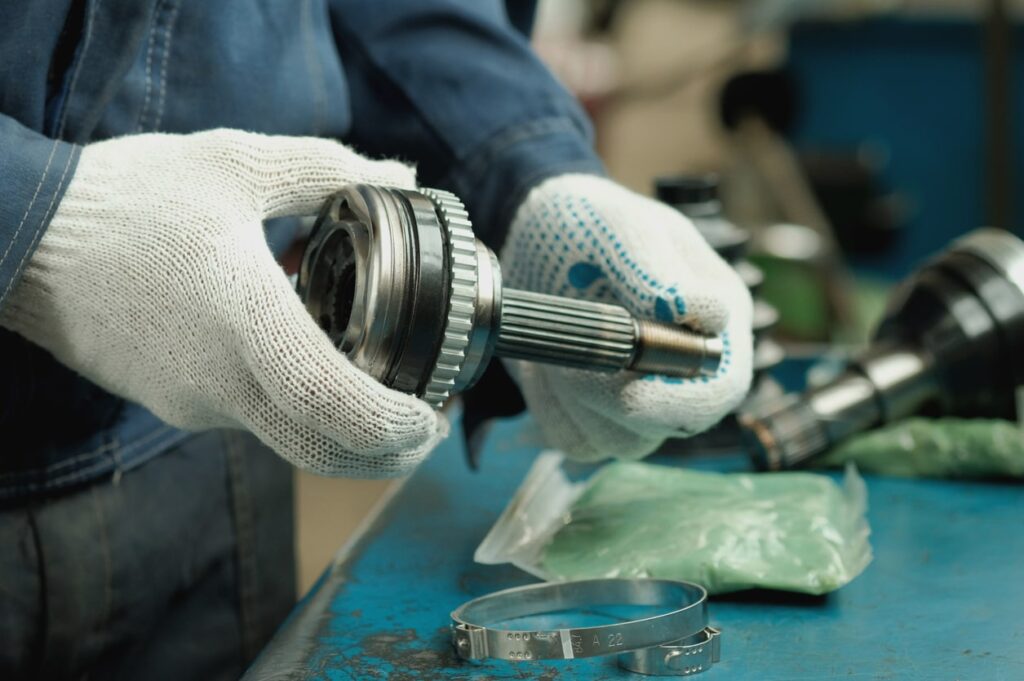
The driveshaft is a long, rotating shaft that transmits torque from the gearbox to the wheels. Depending on whether your vehicle is front-wheel drive, rear-wheel drive, or all-wheel drive, the driveshaft may take various forms and serve slightly different functions. In front-wheel drive vehicles, the driveshafts are typically shorter and include constant velocity joints at either end to accommodate steering movement and suspension travel. Rear-wheel drive and all-wheel drive vehicles often have longer prop shafts that run from the transmission to the rear differential.
What all driveshafts have in common is their need for perfect rotational balance. Because they spin at high speeds, any slight imbalance can create noticeable vibrations. These vibrations are not only uncomfortable for the driver but also cause long-term stress on the gearbox, differential, bearings, and suspension components. A perfectly balanced driveshaft rotates smoothly, whereas an unbalanced one will wobble, causing uneven force distribution through the drivetrain.
Common Causes of Driveshaft Imbalance
There are several reasons why a driveshaft might fall out of balance. One of the most frequent causes is physical damage. This might occur from road debris, off-road driving, or hitting a pothole or kerb at speed. A dent or bend in the driveshaft can immediately alter its weight distribution, disrupting its natural balance. Even a slight deformity can make a significant difference due to the speeds at which the shaft rotates.
Another common cause is wear and tear on the universal joints or constant velocity joints. These joints allow for movement and flexibility but need to be in good condition to function correctly. When they become worn or seized, they can cause the driveshaft to run out of true alignment, resulting in imbalance.
Poor installation or modifications are also contributing factors. If a driveshaft has been replaced or removed and reinstalled without being properly aligned or torqued to manufacturer specifications, it can introduce slight misalignments or imbalances. Similarly, if weights used during the factory balancing process fall off or are removed during repairs, the shaft may no longer rotate evenly.
Corrosion is another issue that can affect balance. Over time, rust can eat away at the metal unevenly, especially if the vehicle is regularly exposed to wet conditions or road salt. This can lead to a change in the weight distribution across the shaft.
Vibration Through the Floor or Seat
One of the most recognisable signs of an imbalanced driveshaft is vibration felt through the floor, seat, or steering wheel while driving. This is usually more noticeable at certain speeds—often when travelling between 30 and 60 mph—but it may also become worse at higher speeds. These vibrations may begin subtly and gradually increase in intensity over time.
The sensation can feel like a constant buzzing or rhythmic pulsing through the cabin. It might start at your feet or in the base of the seat and spread as the speed increases. While vibrations can also be caused by wheel balancing issues, if the problem persists after tyres have been balanced and checked, the driveshaft becomes a likely suspect.
If the vibration disappears when coasting or when the car is not under load, it further suggests the problem is in the drivetrain rather than the wheels or tyres.
Unusual Noises While Driving
An unbalanced driveshaft often produces tell-tale noises. These may include droning, humming, or a low whirring sound that increases in pitch as the vehicle accelerates. In more advanced cases, the imbalance can lead to knocking, clunking, or metal-on-metal contact sounds as the shaft and related components begin to wear under the strain of uneven rotation.
These noises may appear to come from the centre or rear of the vehicle and can be particularly noticeable in rear-wheel or all-wheel drive cars. If you hear a rhythmic metallic noise that increases with vehicle speed and isn’t related to the engine’s revs, the driveshaft is well worth inspecting.
Any sudden or loud knocking sounds when shifting from drive to reverse, or during gear changes, could also be related to failing universal joints, which can directly contribute to balance issues.
Difficulty Maintaining Smooth Acceleration
A driveshaft that is no longer rotating evenly will often affect the smoothness of your acceleration. This might manifest as a shuddering feeling or resistance when pressing the accelerator. In some cases, the car may seem to hesitate or pulse as you try to increase speed, particularly when climbing hills or accelerating from a stop.
This occurs because the rotational force is not being delivered evenly to the wheels, resulting in torque fluctuations. The vehicle may also feel like it’s surging slightly or losing grip momentarily, even when road conditions are good. If your car doesn’t respond as it normally would to throttle input, especially at medium to high speeds, this is another possible sign of driveshaft imbalance.
Excessive Wear on Drivetrain Components
An imbalanced driveshaft does not only affect the shaft itself. Over time, the vibrations and irregular forces it creates will place additional stress on other parts of the drivetrain. Bearings, engine mounts, transmission seals, and differential components may all begin to show signs of premature wear.
One symptom might be transmission fluid leaks, caused by vibrations damaging the output shaft seal. You may also notice noise or roughness from the differential, or faster wear on rear suspension bushes and mounts in rear-wheel drive vehicles. These issues often emerge gradually and may be misdiagnosed unless the driveshaft is inspected as part of the diagnostic process.
Monitoring the health of these components can help confirm whether the driveshaft is causing a knock-on effect within the system.
How to Confirm Driveshaft Imbalance
While symptoms like vibration and noise are strong indicators of an imbalanced driveshaft, proper confirmation usually requires a physical inspection or workshop testing. A visual inspection might reveal signs of damage, missing balancing weights, worn joints, or split CV boots. However, not all forms of imbalance are visible to the naked eye.
At a workshop, the driveshaft can be removed and tested on a balancing machine to detect any weight irregularities. This process is similar to wheel balancing and involves identifying where counterweights might need to be added to restore even rotation.
In some cases, the issue may lie in the universal joints or centre support bearing rather than the shaft itself. Replacing these components can sometimes resolve the imbalance without the need for a full shaft replacement.
Preventing Driveshaft Imbalance
Preventative maintenance is the most effective way to avoid driveshaft issues. Regular servicing that includes checking for worn joints, split CV boots, and unusual noises can help catch early signs of imbalance. Replacing a damaged joint or reapplying lubrication where needed is much cheaper and simpler than dealing with a fully failed shaft.
Keeping the underside of your vehicle clean, particularly during winter, will also reduce the risk of rust and corrosion. If you do a lot of off-road or rural driving, regular checks for dents or damage caused by stones or debris are highly recommended.
If you’ve recently had clutch, gearbox, or differential work carried out, and you begin to notice vibrations or noise afterwards, it’s worth checking that the driveshaft was correctly reinstalled and aligned. Even small errors during reassembly can lead to misalignment, which then causes rotational imbalance over time.
What to Do if You Suspect an Imbalance
If you think your driveshaft might be out of balance, it’s important not to ignore the symptoms. Continuing to drive with the issue can cause damage to other parts of the vehicle and lead to higher repair costs in the long run.
The best course of action is to have the driveshaft inspected by a qualified mechanic or driveshaft specialist. At Driveshaft UK, we offer both inspection and replacement services, as well as rebalancing and reconditioning where appropriate. Our team can identify whether the problem lies in the shaft itself, the joints, or related components, and advise on the most effective repair.
We stock and recondition driveshafts for a wide range of vehicles, and our rebalanced units are tested to precise tolerances for a smooth, safe drive. If you’re local to our Birmingham workshop, we can also fit your replacement part. For customers across the UK, we offer fast delivery and technical support to ensure your vehicle is back on the road as quickly and reliably as possible.
Staying Ahead of Driveshaft Issues
A smooth ride, confident handling, and long-term drivetrain health all rely on a well-balanced driveshaft. While imbalance might start as a minor annoyance, it can soon develop into a serious fault affecting many parts of your vehicle. Staying alert to early signs such as vibration, unusual noises, or acceleration issues can save you time and money.
With proper inspection, professional balancing, and high-quality replacement parts, driveshaft imbalance is a problem that can be solved effectively. Whether you’re dealing with a classic car, a daily commuter, or a high-mileage fleet vehicle, Driveshaft UK is here to help keep your drivetrain performing at its best.
Contact Driveshaft UK today for all your driveshaft needs, including Volkswagen, Volvo and many more .